
IMAGINING THRIVE SCHOOLS
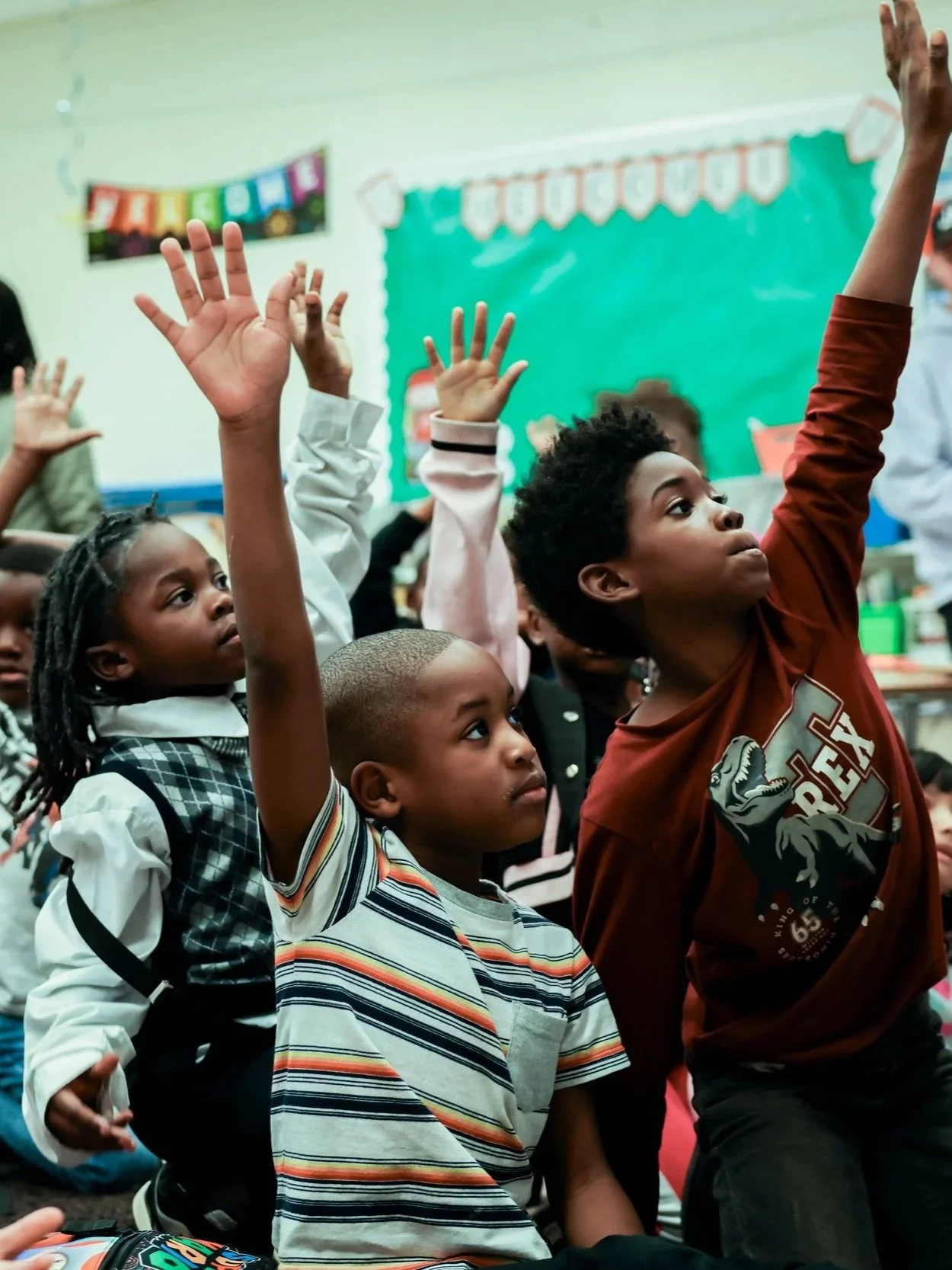
Arik and Melinda Armstead founded the Armstead Academic Project (AAP) in 2019 because they believed that every child—regardless of socioeconomic status—deserves the conditions to truly thrive.
Over the past six years, AAP has served more than 7,000 children and teens through literacy supports, career exposure, wellness programming, and opportunities to explore their full potential. Through this work, we have witnessed something profound: when the right conditions are present, children flourish. And when those conditions are missing, inequity grows.
This insight has deepened our understanding of AAP’s unique opportunity—and calling—to help create more equitable learning environments for U.S. children.
WHAT IF SCHOOLS BECAME
“BLUE ZONES” FOR LEARNING?
In parts of the world known as Blue Zones, people live longer, healthier, more joyful lives because their environments are intentionally designed to support wellbeing—community connection, purpose, movement, healthy habits, and belonging.
At AAP, we asked: What if we applied the same wisdom to education? What if schools in underserved communities were intentionally designed to cultivate the conditions of thriving—academic rigor paired with joy, belonging, wellness, stability, and possibility?
INTRODUCING
AAP’S THRIVE SCHOOLS
Beginning in 2026, AAP will launch a bold, five-year effort to transform learning environments by investing $20,000 per year in three schools located in underserved communities in California and Florida.
THE NEED
Too many children across the U.S. face barriers that limit their potential:
Schools serving majority Black, Latino and Native students receive nearly 20% less funding per student than majority-White schools. (The Education Trust, 2022)
Students of color and those in low-income households are more likely to lack reliable high-speed internet at home. (National Urban League, 2025)
There are large gaps in reading proficiency between White students and students of color in the U.S. (Brookings Institution, 2024)
According to 2024 assessments, Black students in California perform, on average, 30% lower in ELA and math than white students. (California Schools Boards Association, 2024)
Students who are not reading proficiently by the third grade are four times more likely to dropout of high school than reading proficient students. (The Annie E. Casey Foundation, 2011)
As AAP has built relationships with schools across the country, we have had the unique opportunity to sit with educators to learn more about their experience and needs, and have come away with two key learnings that guide our work today:
Basic needs must be met for learning to occur. Underserved students are more likely to have basic challenges that interfere with learning. For example, we began offering vision screenings when we learned that some students simply needed glasses to see the whiteboard. We donated food to schools when we learned there were children who were too hungry to focus in the classroom.
No two schools, and their communities, are the same. As we began to work more closely with schools, we learned that each school community is facing a unique set of challenges. While children in one community may benefit from food donations, a school in another community may need support in delivering its STEM curriculum. There is no one-size-fits-all solution to the inequities in the U.S. education system.
OUR SOLUTION
Each partnership is supported through AAP’s blended investment model, which combines cash grants, in-kind donations from corporate and community partners, and high-impact volunteer engagement. Together, these resources form a customized package of supports that:
Strengthen classroom instruction
Nurture social-emotional growth
Support teacher wellness and sustainability
Expand access to literacy, STEM, career exploration, and whole-child development
Beginning in 2026, AAP will enter its next phase of impact by selecting three Title I schools in low-income communities across California and Florida. In each school, AAP will partner closely with administrators and educators to co-create “educational Blue Zones”—learning environments intentionally designed to support whole-child thriving.




READ: Ensure every child reads at grade level by 3rd grade.
EXPLORE: Provide equitable access to STEAM learning and opportunities to explore emerging interests.
CONNECT: Expose students to college and career pathways that make learning relevant and aspirational.
STAY WELL: Support the full wellness of every child—emotional, mental, physical, and social—so they are ready to learn and succeed.
Every Thrive School begins with an in-depth discovery process grounded in the school’s District-approved School Improvement Plan and State-submitted Strategic Plan. Through this process, AAP identifies systemic barriers to holistic student success and then collaborates with school leadership to develop an annual action plan. To advance these high-leverage solutions, AAP provides targeted grants of $15,000–$20,000 aligned with its four pillars of thriving.
By combining environmental design, evidence-based programming, and long-term partnership, we aim to create school communities where thriving is the norm—not the exception.
THE INVITATION
We invite partners to join us in this visionary effort to enrich classroom instruction, elevate learning environments, and spark joy for children who have too often been left behind. Together, we can build schools where every child has the opportunity to flourish—just as every thriving community should.
The need of each Thrive School will differ, but members of the AAP community–volunteers, partners, donors and supporters–can help create “educational Blue Zones” by contributing to initiatives that help students succeed:
Cash Grants an In-Kind Support: $100,000 Over Five Years
AAP provides each Thrive School with long-term, flexible funding—$100,000 over five years—to advance high-leverage solutions aligned with the school’s improvement plan.
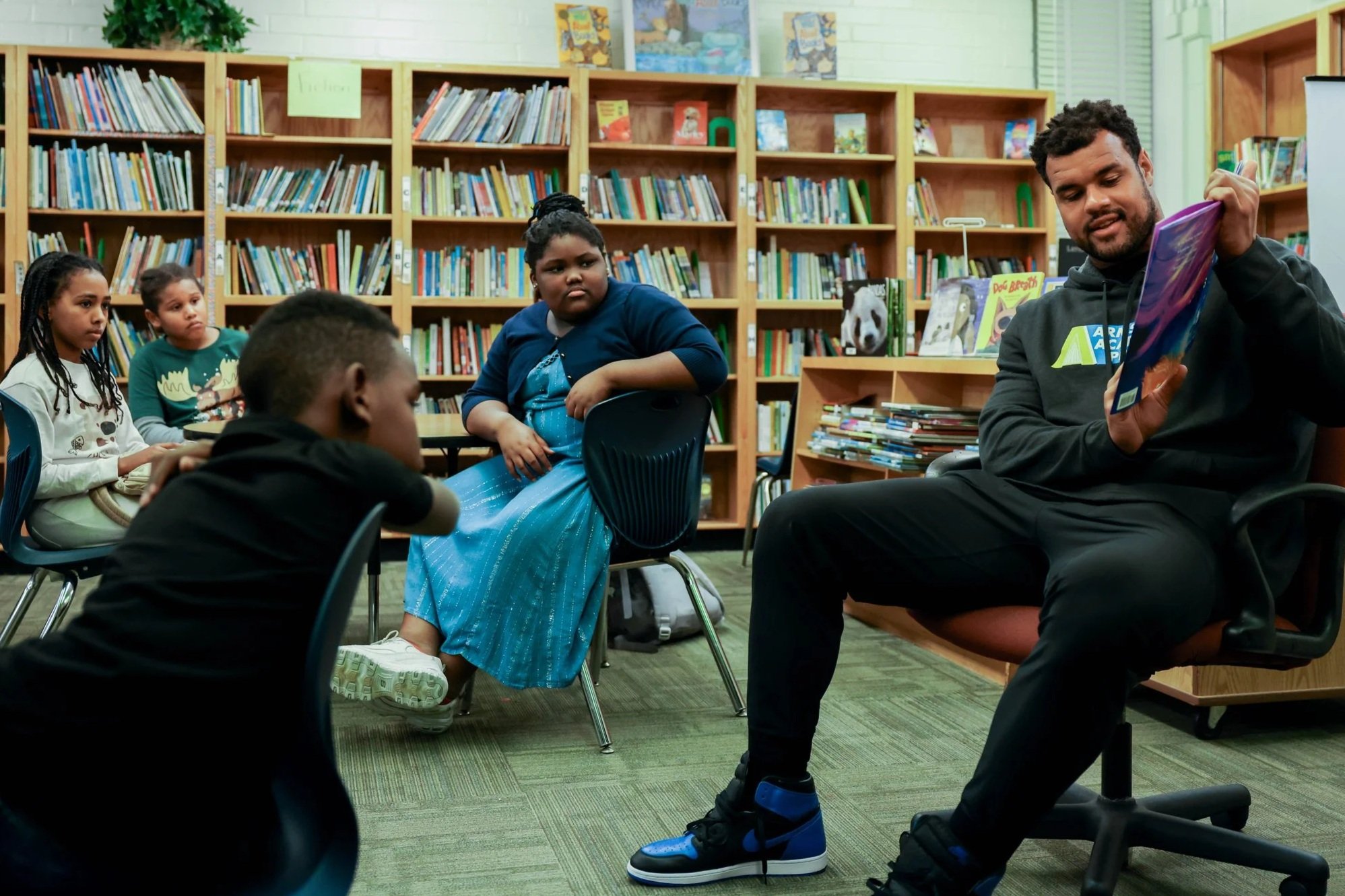
AAP Storytimes
Classroom visits where volunteers, community partners, and athletes read aloud and gift books to students, helping cultivate a love of reading.
Thrive Reading Zones
Transforming school library spaces with donated books selected from the librarian’s wishlist—prioritizing culturally diverse titles and stories that support social-emotional growth. Each space includes a rotating “Take–Keep–Exchange” shelf that offers students free access to books they can borrow, keep, or trade.
STEAM Kits
Providing take-home “projects in a box” that spark curiosity and build skills in Science, Technology, Engineering, Arts, and Math.
Wellness Resources
Supporting free onsite screenings that identify early health issues affecting learning. Through partner organizations, AAP supplements school needs—for example, with vision or dental screenings—and provides health education tools for students and families.
Teacher Appreciation & Wellness Events
Helping create curated appreciation and wellness experiences for educators and paraprofessionals, including massages, art-making, yoga, reflection, and workshops that promote joy and renewal for school staff.
Join us
Arik and Melinda Armstead continue to invest in AAP’s work with generous annual gifts. We also rely on the generosity of individual, corporate and foundation donors who help fuel our efforts. AAP donors believe that all American children, no matter the financial status of their family, deserve the opportunity to thrive.
Your investment will help launch the Thrive Schools Program in 2026, and expand it in the years beyond.
Your gift can…
$2,500
Stock an AAP Community Library with diverse books for an entire school
$5,000
Deliver STEAM Kits for 175 students.
$10,000
Provide validated academic curriculum and toolkits to 200 classrooms.
$15,000
Ensure healthy food is available for all students for an entire semester.
$25,000
Launch a Thrive School partnership in a new school community.
$50,000
Support a full year of Thrive School programming, including teacher wellness and student enrichment.